Patient Capital Rising: Why America's Smartest Founders Are Saying No to Private Equity

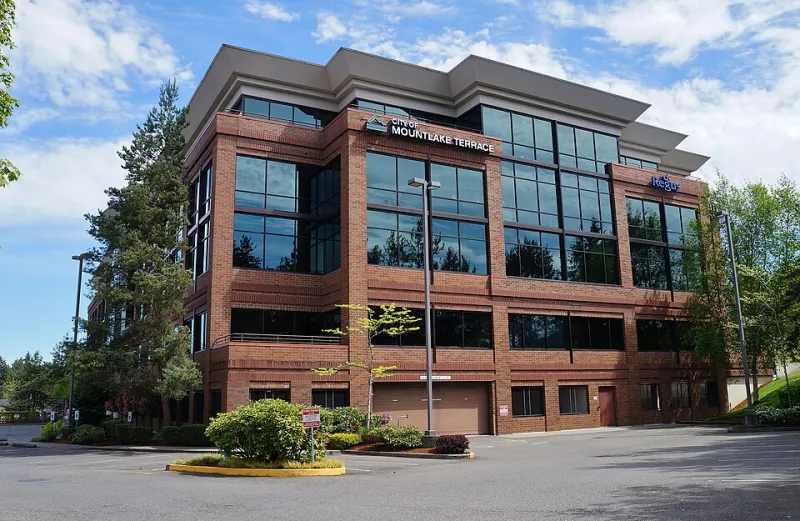
Photo: Williamarturo, CC BY-SA 4.0, via Wikimedia Commons
For much of the 2010s, the private equity playbook was treated as economic gospel. Buy, leverage, optimize, exit — ideally within five years. The model minted billionaires, reshaped industries, and became the dominant force in American corporate finance. But something has shifted. Across the country, a growing number of founders, family-owned enterprises, and independent operators are declining acquisition offers that would once have been impossible to refuse. They are not doing so out of sentimentality. They are doing so out of strategy.
The question worth asking is not why these businesses are rejecting quick exits. The question is why it took so long for the broader market to notice.
The Leverage Hangover
The financial engineering model that defined two decades of private equity activity carried a cost that balance sheets did not always capture immediately. Companies acquired through leveraged buyouts were frequently saddled with debt loads that constrained capital investment, suppressed wages, and prioritized short-term cash extraction over long-term competitive positioning. Research from the American Economic Review has linked PE ownership in certain sectors — particularly retail, healthcare, and media — with accelerated job losses and reduced research and development spending.
The fallout was not invisible. A string of high-profile bankruptcies among PE-backed retailers, hospital groups, and media companies created a reputational shadow over the model. More importantly, it created a cautionary data set that founders and their advisors began studying carefully.
"We had three serious conversations with buyout firms over a seven-year period," says the founder of a mid-sized industrial components manufacturer based in Ohio. "Every single time, the five-year exit horizon was the first thing on the table. That's not a partnership. That's a countdown clock."
The Rise of the Family Office and Patient Institutional Capital
Filling the void left by founder skepticism toward traditional PE is a different class of capital — one defined by longer time horizons and a genuine alignment of incentives. Family offices, which manage the private wealth of ultra-high-net-worth households, have expanded dramatically as an ownership vehicle over the past decade. According to estimates from Campden Wealth, North American family offices now control more than $1.2 trillion in assets under management, with a growing proportion allocated to direct business investments rather than fund structures.
Unlike PE funds, which operate on fixed lifecycles and must return capital to limited partners within a defined window, family offices can hold positions indefinitely. This structural difference is not cosmetic — it fundamentally changes how an ownership partner behaves during a downturn, a market disruption, or a long-horizon capital investment cycle.
Beyond family offices, a cohort of institutional investors — including certain university endowments and mission-aligned foundations — has begun carving out dedicated allocations for what the investment community has started calling "permanent capital vehicles." These structures allow businesses to take on institutional-grade partners without subjecting themselves to the liquidity pressures that have historically distorted PE-backed decision-making.
Case Studies in Deliberate Ownership
The evidence is not merely anecdotal. Consider the trajectory of several founder-led companies that have publicly discussed their decision to remain independent or partner with patient capital providers.
In the food and beverage sector, a number of regional craft producers have declined acquisition offers from PE-backed roll-up platforms, opting instead for minority investments from family offices that allowed founders to retain operational control. Several of these companies have since grown revenue at compounding rates that exceed those of their acquired competitors — companies that, under new ownership, experienced the cost-cutting and brand dilution that frequently accompanies leveraged acquisitions.
In the technology services space, a cluster of enterprise software companies in the Southeast has attracted attention for explicitly marketing their PE-free ownership structure to prospective customers and employees alike. The argument is straightforward: clients who depend on multi-year implementation relationships want to know that the company they are partnering with will not be flipped to a new owner in three years. Employees, particularly senior engineers and product architects, increasingly factor ownership stability into career decisions.
Redefining the Exit Mentality
The cultural shift may be as significant as the financial one. For years, the startup and entrepreneurial community treated a PE acquisition or an IPO as the natural endpoint of the business-building journey — the moment when founders collected their reward and moved on. That narrative is losing its grip.
A new generation of American entrepreneurs is drawing inspiration from a different model: the multigenerational family enterprise. Companies like Cargill, Koch Industries, and Publix Super Markets — all privately held and managed with decades-long strategic horizons — are being studied not as curiosities but as templates. The lesson these companies offer is not that growth is unimportant, but that the mechanism through which growth is pursued shapes the kind of company that emerges.
This perspective is gaining institutional legitimacy. Business schools that once devoted their case study libraries almost exclusively to public company governance and PE value creation are beginning to integrate family business strategy and permanent capital stewardship into core curriculum.
The Strategic Advantages of Saying No
Companies that have declined PE acquisition offers frequently cite a cluster of shared advantages in the years that followed. First, talent retention: without the uncertainty of ownership transitions and post-acquisition restructuring, these companies report higher retention rates among senior leadership and specialized technical staff. Second, customer trust: in industries where long-term relationships matter — manufacturing, professional services, healthcare — the signal of stable, aligned ownership carries measurable commercial value. Third, capital allocation flexibility: freed from debt service obligations and dividend recapitalizations, independent companies can invest in equipment, training, and product development on their own timetable.
None of this means that private equity has ceased to serve a legitimate function in the American economy. Distressed turnarounds, succession-driven transitions, and capital-intensive growth scenarios all represent contexts where PE involvement can create genuine value. But the era in which PE acquisition was the default aspiration for any successful American business appears to be ending.
What is replacing it is something more durable — a philosophy of ownership that measures success not in exit multiples but in decades of compounding strength. For the American economy, that is not a retreat from ambition. It is a more sophisticated expression of it.