Corporate America's Great Migration: How Secondary Cities Are Winning the Headquarters Race
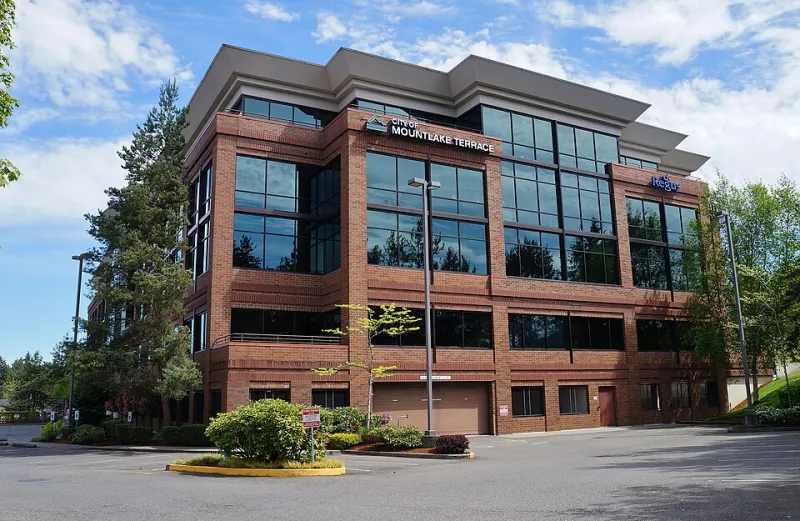
Photo: SounderBruce, CC BY-SA 4.0, via Wikimedia Commons
For generations, the address on a company's letterhead carried a kind of symbolic weight. A Fifth Avenue suite, a Wilshire Boulevard tower, or a San Francisco waterfront campus signaled ambition, prestige, and access. That calculus is changing — and changing fast.
Across the United States, a structural shift in corporate geography is well underway. Major employers are quietly, and sometimes loudly, pulling up stakes from legacy business centers and planting new flags in cities that most financial analysts barely mentioned a decade ago. The consequences for American economic development, workforce distribution, and regional competitiveness are substantial.
The Economics of Exodus
The most immediate driver of corporate relocation is straightforward: cost. Commercial real estate in New York, San Francisco, and Los Angeles has remained stubbornly expensive even as hybrid and remote work arrangements have reduced the need for dense, centralized office footprints. For companies managing tight margins or facing shareholder pressure to improve operational efficiency, the arithmetic of maintaining a midtown Manhattan headquarters versus a comparable campus in Nashville or Raleigh becomes increasingly difficult to justify.
State and local tax policy compounds the calculus. Texas, Florida, Tennessee, and North Carolina have each deployed aggressive incentive packages designed to attract corporate relocations — offering everything from property tax abatements to workforce training subsidies. When Tesla moved its headquarters to Austin in 2021, and when Oracle and Hewlett Packard Enterprise made similar transitions, those decisions were not made in a vacuum. They reflected deliberate policy competition between states, and the states offering lower friction are winning.
According to data from commercial real estate firm CBRE, net corporate relocations to Sun Belt and Mountain West markets have accelerated consistently since 2019, with the pandemic functioning less as a cause and more as an accelerant of trends already in motion.
Talent Is the New Geography
Perhaps the more nuanced argument for decentralization involves talent acquisition — and retention. The assumption that top-tier professionals are concentrated exclusively in gateway cities has been fundamentally disrupted by remote and hybrid work. A software engineer in Pittsburgh or a financial analyst in Salt Lake City no longer represents a compromise hire. They represent access to a workforce that is often more affordable, more stable in tenure, and increasingly well-trained through the expansion of regional universities and community college technical programs.
Companies that have relocated or expanded into secondary markets frequently report lower voluntary attrition rates. The quality-of-life proposition in cities like Boise, Charlotte, and Columbus — lower housing costs, shorter commutes, stronger community ties — resonates with a broad swath of the American workforce that was never entirely comfortable with the transactional culture of major metropolitan centers.
This does not mean that primary markets are becoming irrelevant. New York will remain a global financial capital; Silicon Valley will continue to anchor venture-backed technology formation. But the monopoly these cities once held over corporate decision-making has been decisively broken.
Regional Economies Reborn
The downstream effects on receiving communities are significant and, in many cases, genuinely transformative. When Amazon selected Nashville as the home for its Operations Center of Excellence — bringing thousands of high-wage jobs — the ripple effects extended well beyond the immediate employment figures. Local contractors, hospitality businesses, residential developers, and service providers all absorbed the economic energy of that decision.
Similar dynamics have played out in Indianapolis, which has attracted life sciences operations; in Phoenix, which has become a semiconductor manufacturing corridor; and in the Research Triangle of North Carolina, which now rivals many coastal clusters in biotechnology and advanced manufacturing density.
For state economic development officials, this moment represents an opportunity that is both genuine and fragile. Attracting a corporate headquarters is one thing. Building the infrastructure — transportation networks, broadband access, educational pipelines, and housing supply — necessary to sustain long-term corporate commitment is another challenge entirely. Cities that fail to scale their capacity risk becoming victims of their own success, replicating the affordability and congestion problems that drove companies away from legacy hubs in the first place.
The Leadership Dimension
Corporate leaders navigating relocation decisions face pressures that extend beyond spreadsheets. Relocating a headquarters means asking senior employees to uproot families, reconfiguring institutional relationships, and managing the cultural disruption that comes with geographic change. Not every executive team handles that transition with equal skill.
The companies that have managed relocations most effectively tend to share a common characteristic: they communicated the strategic rationale early, involved employees in the transition process, and invested meaningfully in the communities they were entering rather than treating relocation purely as a cost-reduction exercise. That distinction matters both for internal morale and for the goodwill of local governments and communities whose cooperation is essential to long-term success.
A New Map of American Business
The United States has always been a nation of economic reinvention. Industrial corridors gave way to service economies; rust belt cities reinvented themselves as medical or technology hubs; agricultural regions diversified into logistics and distribution. The current redistribution of corporate headquarters and major operations is another chapter in that ongoing story.
What makes this moment distinctive is the speed of the shift and the breadth of the sectors involved. This is not simply a technology company phenomenon or a financial services story. Manufacturers, healthcare systems, insurance carriers, and professional services firms are all participating in the same geographic reassessment.
For policymakers, investors, and business leaders alike, the central question is not whether this migration will continue — it will — but how thoughtfully it can be managed to produce durable regional prosperity rather than a series of boom-and-bust cycles that leave communities worse off than before. The American economy has always been at its strongest when its dynamism is broadly distributed. The great corporate migration, if navigated with strategic vision, offers a genuine opportunity to advance that principle.